



You drank too much last night, and now you feel it all over your body. It can be tempting to try quick remedies, like a shower, coffee or a greasy breakfast. But the best hangover cure is to wait it out and drink lots of water. Hangover symptoms usually get better within a day.
Advertisement
Cleveland Clinic is a non-profit academic medical center. Advertising on our site helps support our mission. We do not endorse non-Cleveland Clinic products or services. Policy
A hangover is when you have unpleasant physical and mental symptoms after drinking too much alcohol. “Too much” varies from person to person. Some people get a hangover after just one drink. Some people who drink heavily don’t get symptoms.
Advertisement
Cleveland Clinic is a non-profit academic medical center. Advertising on our site helps support our mission. We do not endorse non-Cleveland Clinic products or services. Policy
A hangover hits about six to eight hours after excessive alcohol intake. Usually, symptoms begin in the morning hours after drinking the night before. But a hangover can happen at any time of day, depending on when you drink.
Once you’re feeling the effects of excess alcohol, you may want to try any remedy to make it go away. But there’s no quick fix for a hangover. Waiting it out while taking care of yourself is the best option.
In general, the severity of your symptoms depends on how much you drank and for how long. Your health, medications and other factors also play a role. Symptoms of a hangover may include:
Several of these symptoms also occur during alcohol withdrawal. But during withdrawal, they’re typically more severe and last longer.
In short, alcohol causes hangovers. Having more than one beverage per hour increases your risk. Your body needs about an hour to process one drink.
Hangovers typically begin when your blood alcohol content (BAC) significantly drops. This is usually six to eight hours after drinking.
Advertisement
Alcohol affects your body in several ways. These factors contribute to why you get a hangover:
Anyone can develop a hangover after drinking alcohol. Factors that may increase your risk of getting one or make it more severe include:
With a hangover, you may not be thinking clearly. It impairs your attention, decision-making processes and muscle coordination. Because of this, driving during a hangover can be dangerous or deadly. You may also be less productive at work or school.
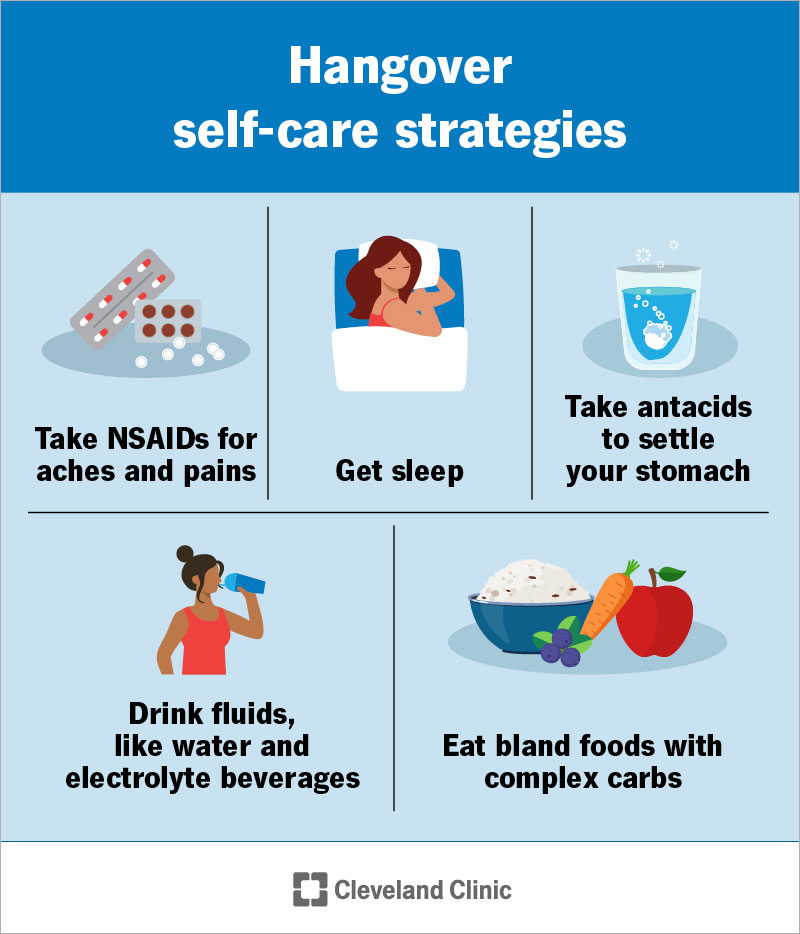
Image content: This image is available to view online.
View image online (https://my.clevelandclinic.org/-/scassets/images/org/health/articles/16627-hangover.jpg)
Time is the only true cure for a hangover. It takes time for your body to clear the toxic byproducts, rehydrate and heal tissue. Symptoms tend to ease up over eight to 24 hours.
Advertisement
Many hangover remedies claim to treat your symptoms. But they often lack scientific evidence. And some can be dangerous. For example, drinking more alcohol (“hair of the dog”) won’t help. And several pills or supplements make claims of a cure without evidence to back them up.
These self-care strategies may help you feel better while you wait out a hangover:
The only surefire way to avoid a hangover is not to drink alcohol. But if you’re going to drink, the following steps may help prevent one or limit its severity:
Advertisement
A hangover is unpleasant, but symptoms tend to go away within a day or so. If you drank too much alcohol and feel sick, try at-home hangover remedies like drinking plenty of water, eating some carbs and sleeping. There’s no quick cure. You need to let your body rid itself of alcohol and heal. If excessive drinking is interfering with your life, talk to your healthcare provider.
Advertisement



Sign up for our Health Essentials emails for expert guidance on nutrition, fitness, sleep, skin care and more.
Learn more about the Health Library and our editorial process.
Cleveland Clinic’s health articles are based on evidence-backed information and review by medical professionals to ensure accuracy, reliability and up-to-date clinical standards.
Cleveland Clinic’s health articles are based on evidence-backed information and review by medical professionals to ensure accuracy, reliability and up-to-date clinical standards.
Cleveland Clinic’s primary care providers offer lifelong medical care. From sinus infections and high blood pressure to preventive screening, we’re here for you.
